Strength Beneath the Surface: The Evolution of Modern Cast Iron Piping
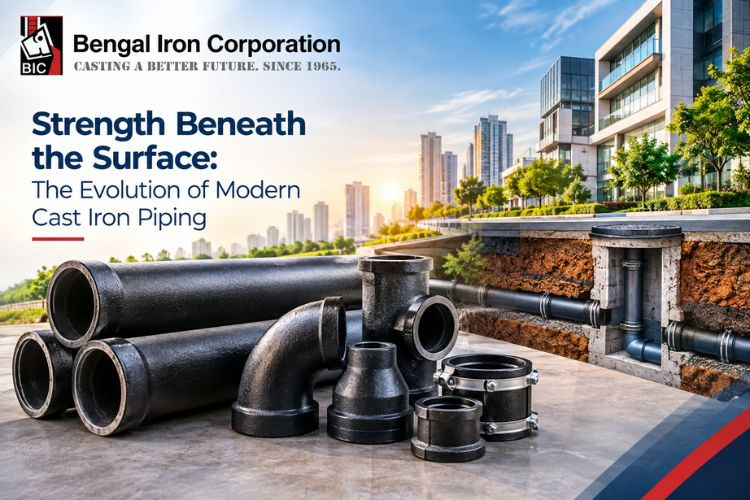
Modern infrastructure is changing rapidly, but some engineering solutions continue to prove their value because they combine strength, reliability, and long-term performance. Cast iron piping is one such solution. From drainage networks and commercial buildings to industrial installations, well-engineered cast iron systems continue to play an important role in moving water and waste safely beneath the surface.
Today, the focus is no longer simply on producing strong pipes. It is about creating complete piping systems where pipe design, fittings, joints, installation, and supporting access components work together. This is where experienced cast iron pipe fittings manufacturers in India have an important role to play in developing dependable solutions for modern infrastructure.
From Traditional Casting to Modern Piping Solutions
Cast iron has been used for piping applications for generations. Its development over time has transformed traditional cast products into more refined and application-focused systems.
Modern manufacturing places greater emphasis on dimensional accuracy, surface quality, consistency, and application-specific design. Instead of treating a pipe as an isolated component, manufacturers increasingly focus on the complete system—from straight pipe sections and bends to branches, connectors, and access points.
This system-based approach helps engineers and project planners select components that work together efficiently while supporting long service life.
Why Cast Iron Still Matters Beneath Modern Buildings
Underground and concealed piping systems are expected to perform for years with minimal disruption. Once installed beneath floors, walls, roads, or other structures, replacing them can be expensive and inconvenient.
Cast iron piping offers several characteristics that make it suitable for demanding applications. Its inherent rigidity provides structural stability, while its robust construction can help withstand everyday mechanical stresses associated with building and drainage environments.
Another important consideration is sound performance. In building drainage applications, appropriately designed cast iron systems can help reduce the transmission of pipe-flow noise compared with some lightweight alternatives.
However, the performance of any piping network depends on more than the material itself. Correct sizing, suitable fittings, proper jointing, installation practices, and maintenance all contribute to the overall result.
The Fitting Makes the System Complete
A straight pipe alone cannot create a functional network. Real-world installations require changes in direction, connections between different branches, transitions, and access points.
This makes fittings a critical part of modern piping design.
Bends, branches, reducers, connectors, and other fittings allow engineers to adapt a piping layout to the actual structure of a building or infrastructure project. Precision in these components is particularly important because poorly matched fittings can complicate installation and affect the efficiency of the overall network.
For this reason, choosing experienced cast Iron pipe fittings manufacturers in India can be an important consideration when planning a complete cast iron piping system. Consistent dimensions and appropriate component design can make installation more practical and help create a better-integrated network.
The Growing Role of Hubless Connections
One significant development in modern cast iron drainage systems is the increasing use of hubless configurations. Instead of relying on traditional hub-and-spigot arrangements, hubless systems use mechanical couplings to connect pipe sections and fittings.
The design of hubless cast iron pipe joints allows components to be assembled without conventional hubs, which can offer greater flexibility when working within restricted installation spaces.
These joints also make it easier to create modular piping layouts where sections may need to be connected, adjusted, or maintained during the life of a building.
The quality of the coupling, pipe dimensions, installation procedure, and alignment remain essential. A modern jointing system can only perform as intended when the complete installation follows appropriate technical requirements.
Connecting Piping With Better Access Planning
A reliable underground network also needs practical access points. Drainage and utility systems require inspection and maintenance, making access covers an important part of infrastructure planning.
For example, ductile iron chamber cover India solutions can provide robust access to underground chambers while supporting the surrounding surface environment. Ductile iron is valued for its strength and suitability for applications where access covers may experience substantial mechanical loads.
Similarly, projects searching for a cast iron chamber cover near you India often need to consider more than geographical convenience. Load requirements, dimensions, installation location, surface conditions, and application should all be evaluated before selecting a chamber cover.
This highlights an important principle in modern infrastructure: pipes, joints, chambers, and covers should be considered as connected parts of the overall system rather than independent products.
What Should Buyers Look for in a Modern Piping System?
Choosing cast iron piping is not simply about comparing product prices. A better purchasing decision begins with understanding the application.
Some important factors include:
1. Application requirements
The intended use—such as soil, waste, drainage, or other infrastructure applications—should guide product selection.
2. Dimensional consistency
Pipes and fittings need to work together accurately. Consistent dimensions can make assembly and installation easier.
3. Jointing requirements
The selected jointing method should match the system design and installation conditions.
4. Component availability
A complete range of fittings, bends, branches, and accessories can simplify project procurement.
5. Manufacturing capability
Working with an established manufacturer can provide greater confidence in production consistency and technical support.
6. Long-term maintenance
Access points and inspection arrangements should be considered during the initial design rather than added as an afterthought.
The Future Is About Complete Infrastructure Systems
The evolution of cast iron piping demonstrates how an established material can remain relevant by adapting to modern engineering requirements.
Today, the conversation is moving beyond simply asking whether a pipe is strong. Engineers and buyers are looking at how the complete system performs—from the manufacturing process and fittings to jointing methods, access covers, installation, and future maintenance.
For manufacturers such as Bengal Iron Corporation, this system-oriented approach creates an opportunity to deliver products that support the changing needs of modern infrastructure.
The strength beneath a building or road may not always be visible, but its importance is undeniable. Well-designed cast iron piping systems can provide the foundation for dependable drainage and infrastructure networks where performance needs to continue long after installation is complete.
Conclusion
Modern cast iron piping is not simply a continuation of an old manufacturing tradition. It represents the combination of proven material characteristics with evolving manufacturing techniques, improved fittings, modern jointing solutions, and better infrastructure planning.
From precision-made pipe fittings to hubless cast iron pipe joints, and from underground drainage networks to durable chamber access solutions, every component has a role in creating a dependable system.
As infrastructure becomes more demanding, the future of cast iron piping will increasingly depend on precision, compatibility, and complete system thinking. Choosing the right manufacturer and components can therefore make a meaningful difference to the performance and practicality of an entire project.
Frequently Asked Questions
Q. What are cast iron pipe fittings used for?
A. Cast iron pipe fittings are used to connect, redirect, branch, or adapt cast iron piping systems. They are commonly incorporated into drainage and building infrastructure networks.
Q. Why are hubless cast iron pipe joints used in modern systems?
A. Hubless cast iron pipe joints use mechanical couplings rather than traditional hubs. This can provide installation flexibility, particularly where space or layout conditions require a compact connection method.
Q. How do I choose a suitable cast iron pipe fittings manufacturer in India?
A. Consider manufacturing capability, product range, dimensional consistency, quality practices, application suitability, and the manufacturer's ability to provide compatible pipes and fittings.
Q. What should I consider when selecting a chamber cover?
A. Load requirements, dimensions, installation environment, surface conditions, accessibility, and the material's suitability for the intended application should all be considered.
Q. Are cast iron piping systems suitable for modern infrastructure?
A. Yes. Properly designed and installed cast iron piping systems can continue to serve modern drainage and infrastructure applications where durability, rigidity, and long-term performance are important.
Blog Development Credit
This article was developed through AI-assisted research and content ideation using ChatGPT and Google Gemini, with the final topic direction, SEO strategy, content refinement, and brand-focused presentation prepared for Bengal Iron Corporation.


Comments